Meal Prep Storage and Reheating: The Practical Checklist
A meal-prep plan is incomplete without storage and transport. Containers organise portions, but they do not make food safe by themselves. Use the refrigerator, the calendar and a food thermometer as part of the recipe. The guidance here concerns ordinary perishable prepared meals; follow product-specific instructions and professional advice where your circumstances require more care.
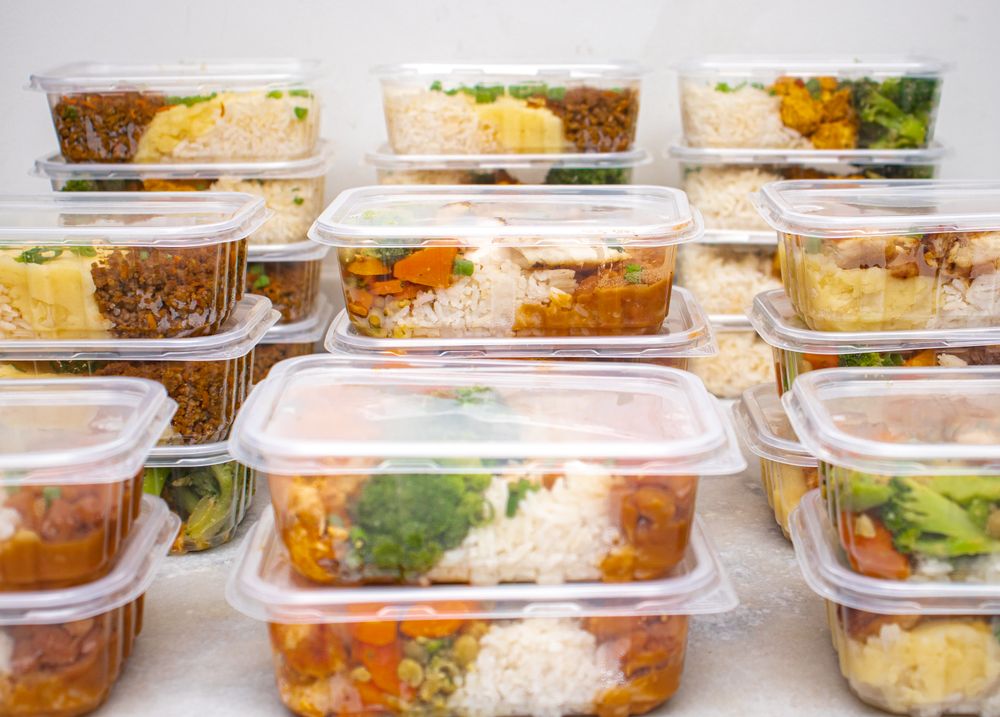
Photo: IARA MELO · Photo license. Appropriate food-container storage subject; no claim the photograph establishes storage safety or refrigerator temperature.
What you need
- A refrigerator thermometer
- Shallow food-safe containers with lids
- Preparation-date labels
- A suitable food thermometer
- An insulated lunch bag and adequate cold sources when needed
Step by step
- Check that the refrigerator is at 40°F (4°C) or below. Use a refrigerator thermometer rather than assuming a numbered control dial tells you the actual air temperature.
- Divide a large cooked batch into shallow portions and refrigerate promptly. Do not leave perishable food out longer than 2 hours, or 1 hour when the surrounding temperature exceeds 90°F (32°C).
- Label the preparation date, not just the day you opened the container. Plan to use properly refrigerated cooked leftovers within 3–4 days, or freeze a later portion promptly.
- Keep raw meat and its juices away from prepared meals and ready-to-eat toppings. Use clean tools and containers; do not return a cooked portion to an unwashed raw-food plate.
- Transport cold meals with appropriate insulation and cold sources, then refrigerate on arrival where possible. A commute, a parked car and a desk are part of the same temperature-control plan.
- For reheating cooked leftovers, heat to 165°F (74°C) and check with a thermometer. Stir or rotate where practical to reduce cold spots. Reheat the portion you intend to eat rather than repeatedly warming the entire batch.
Refrigeration and freezing serve different dates
The refrigerator is for near-term meals, while prompt freezing can help with portions intended for a later date. Neither approach repairs food that has already been left warm for too long. Choose freezer-safe containers, leave appropriate space for expansion and mark both the food and preparation date. Texture can change after freezing, especially in fresh watery toppings, so keep those separate when practical.
Thaw in the refrigerator, not on the counter
For a frozen prepared meal, plan ahead and thaw it in the refrigerator at 40°F (4°C) or below. Keep the container covered and place it on a tray if it might drip. A large or densely packed portion can take more than a day to thaw; choose smaller portions and allow extra time. Do not leave it on the counter to speed up the process. Reheat cooked leftovers to 165°F (74°C). If you need a faster method, consult the linked USDA safe-defrosting guidance for the conditions that apply to cold-water or microwave thawing, including immediate cooking or reheating.
Smell is not a complete safety check
An unpleasant smell, visible spoilage or a damaged package is a reason to discard food, but the absence of those signs does not prove a meal has been stored safely. Do not taste a questionable portion to decide whether it is safe. Use the known preparation date, temperature history and product guidance. A sauce, lemon juice or a tight lid does not turn an ordinary prepared lunch into a shelf-stable product.
Cold lunches still need a cold chain
A chickpea salad or oats jar may be eaten without reheating, but it remains perishable. Keep it cold at home, during the journey and while waiting to eat. Pack only what you need, and use enough cold sources for the circumstances rather than treating a thin decorative lunch bag as refrigeration. If suitable storage is unavailable, change the lunch plan instead of stretching the time at room temperature.
Know what this checklist cannot decide
Different foods, products and household circumstances can require more specific guidance. This page does not assess a meal remotely or prescribe a medical diet. Refer to the linked FDA storage guidance and FoodSafety.gov charts, and follow package directions. When the temperature history of a perishable meal is uncertain, do not use reheating as a guarantee that every hazard has been removed.
Your quick checklist
- Refrigerator at 40°F (4°C) or below.
- Preparation date is labelled and later portions have a freezing plan.
- Transport stays cold; reheated cooked leftovers reach 165°F (74°C).
Common questions
Can I keep a full five-day batch in the refrigerator?
Do not assume that. The general cooked-leftover window is 3–4 days; freeze later portions promptly or make a second batch.
Should I cool a large pot on the counter overnight?
No. Divide into shallow portions and refrigerate promptly within the guidance above.
Does reheating make any leftover safe?
No. Reheating is not a remedy for an unknown or unsafe storage history.