Chickpea Couscous Salad for a No-Reheat Lunch
Canned chickpeas, couscous and chopped vegetables make a flexible cold lunch. Dressing the grain lightly and adding watery ingredients thoughtfully helps keep the texture pleasant. A no-reheat lunch still needs safe refrigeration and cold transport; room-temperature convenience is not the same thing as shelf stability.
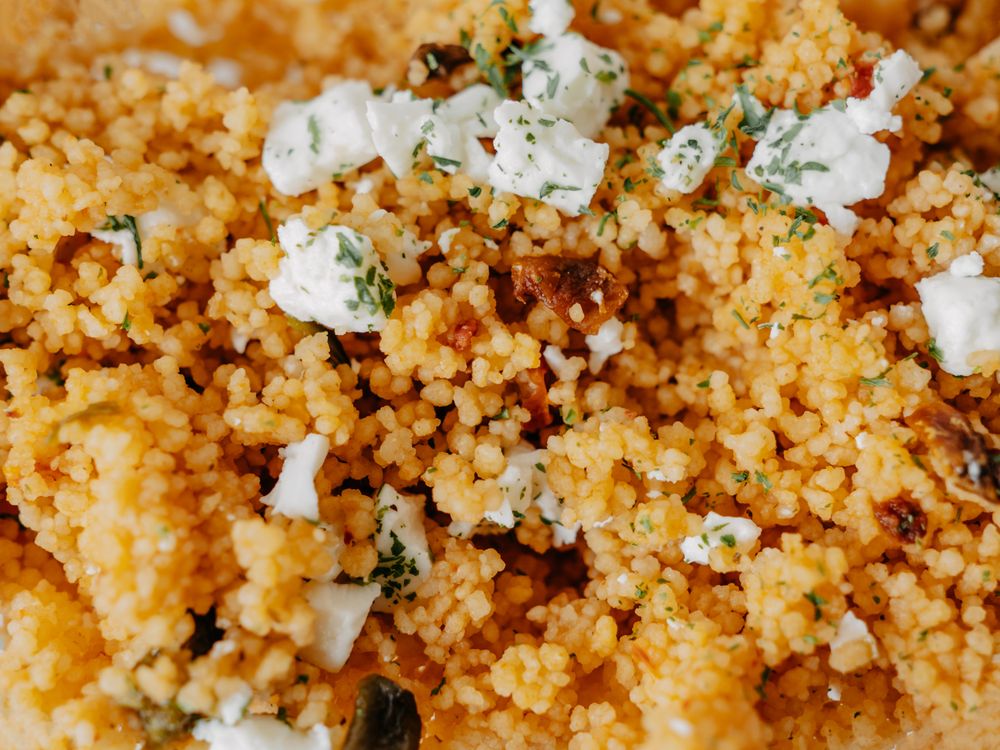
Photo: Lisa Fotios · Photo license. Couscous grain matches. Stock variation includes cheese and does not establish chickpea content; caption as couscous serving inspiration, not exact recipe.
Ingredients
US kitchen measures and practical metric equivalents. For cans, the weight is the package size before draining unless stated otherwise.
| Ingredient | US measure | Metric |
|---|---|---|
| plain couscous | 1 cup dry | 170 g dry |
| boiling water or broth | As directed on package | As directed on package |
| chickpeas, drained and rinsed | 1 can (15 oz) | 425 g can |
| cucumber, seeded if very watery and diced | 1 medium | 1 medium |
| bell pepper, diced | 1 medium | 1 medium |
| olive oil | 3 tbsp | 45 mL |
| lemon juice | 3 tbsp | 45 mL |
| fine salt, or to taste | 1/4 tsp | 1.25 mL |
| chopped parsley, optional | 2 tbsp | 30 mL |
Ingredient notes: Contains wheat from standard couscous. Optional feta contains milk.
Step-by-step method
- Prepare plain couscous using its package instructions. Different couscous styles need different amounts of liquid and different cooking methods; pearl couscous is not a direct timing replacement for the small quick-cooking grain.
- Drain and rinse chickpeas. Wash the cucumber, pepper and optional parsley. Dice vegetables into pieces small enough to share a forkful with the grain, removing a very watery seed centre from the cucumber if needed.
- Mix olive oil, lemon juice and salt in a small bowl. Fluff the prepared couscous with a fork so it is not packed into a dense mass. Keep raw-poultry tools, if using them elsewhere in your kitchen, away from these ready-to-eat ingredients.
- Combine couscous and chickpeas in a wide bowl, then add the chopped vegetables and dressing. Fold gently and taste the immediate serving with a clean spoon. Add parsley if using.
- Divide the remainder into shallow suitable containers and refrigerate promptly. Do not let a large warm bowl sit out until it feels completely cold. Label with the preparation date and plan to use the portions within the storage guidance.
- Keep the salad cold during travel with an insulated bag and adequate cold sources. Stir before eating and adjust lemon to taste. If the meal has been left without safe temperature control, do not assume the lemon juice makes it safe.
Choose the right couscous
The familiar small couscous in many US supermarkets is different from larger pearl couscous. Read the package rather than applying one water ratio to both. Plain couscous is useful because a flavoured packet may bring extra salt and ingredients that change the dressing. The gram amount is a practical guide, not a guarantee that every brand packs into a cup in exactly the same way. Weigh when the distinction matters to your preparation.
Manage moisture without complicated rules
Cucumber and tomatoes can release liquid during storage. This version uses pepper alongside cucumber and leaves tomatoes as an optional last-minute addition. Drain the chickpeas well, fluff the grain and use a container that is not overfilled. If you prefer the sharpest crunch, pack the chopped vegetables separately and combine at lunch. A small extra lemon wedge can freshen the flavour, but it is not a replacement for refrigeration.
Adapt the bowl honestly
Add a separately stored feta topping if you enjoy it, remembering that it introduces milk. Ordinary couscous is made from wheat; the recipe is not gluten-free. Replacing it with rice or quinoa changes both preparation and texture, so cook the new base according to its own directions before combining. Choose plain canned chickpeas when you want more control over the seasoning, and check every packaged ingredient for your own allergen requirements.
Your quick checklist
- Read the whole method and measure the ingredients before heating.
- Check your appliance instructions and leave room for air to circulate.
- Use the doneness checks in the method; the clock is only a starting guide.
Common questions
Can I eat this without reheating?
Yes, when all ingredients have been prepared appropriately and kept safely cold. A no-reheat lunch must still be refrigerated and transported cold.
Is lemon juice enough to preserve it?
No. This is not a tested preservation recipe, and the dressing does not make the salad safe for extended warm storage.