Prepared Meals After a Power Outage: Use Time and Temperature, Never a Taste Test
An outage changes the storage conditions behind every prepared-meal label. Use current official guidance, actual time and temperature information and the food category to decide what to discard. Do not taste a meal or rely on smell to establish safety.
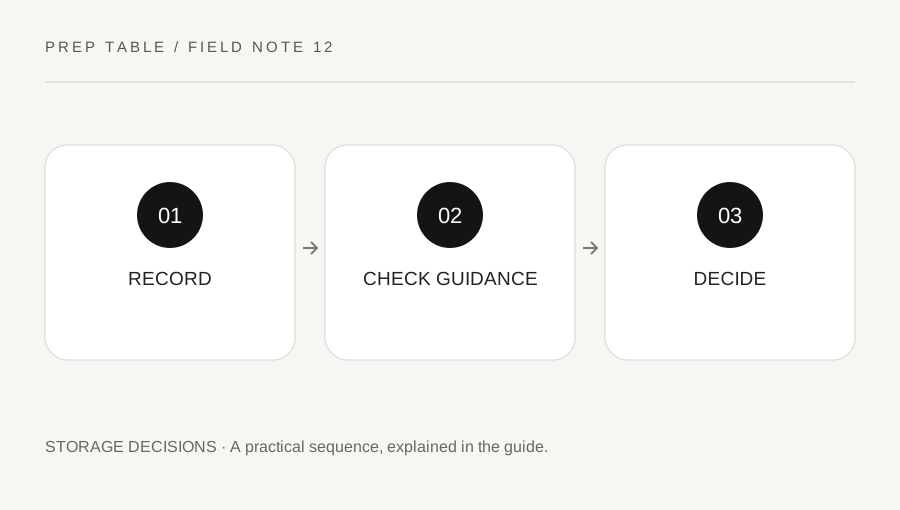
Original explanatory diagram. Examples illustrate a method or decision; they are not claims of personal testing.
Keep the appliance closed and record the event
Follow official outage guidance and keep refrigerator or freezer doors closed as much as possible. Record when power was lost and restored if known. A label's preparation date does not describe the food's temperature during the outage.
Use appropriate appliance or food-temperature information where available and follow the relevant guidance. Do not repeatedly open the door to inspect every container or create a falsely precise history from memory. Mark unknown times and conditions honestly.
Read the chart for the actual food
FoodSafety.gov provides separate refrigerated and frozen decision charts. Prepared leftovers, cooked grains, dairy and other components can have different entries. Read the food category and the chart's stated exposure conditions together.
Do not treat a general closed-appliance estimate as a direct measurement of each meal. Actual conditions matter. Follow current official instructions, including discarding perishable food when its unsafe exposure or uncertainty requires that decision.
Use a concrete refrigerated example
The FoodSafety.gov refrigerated chart directs discarding relevant perishable foods, including cooked leftovers, when exposed to 40°F or above for more than two hours. If a prepared meal is known to have been above that threshold for three hours, a pleasant smell does not reverse the decision.
Never taste to test. Reheating is not a reliable rescue for food held unsafely. Keep the decision based on the actual category, time and temperature information rather than the effort or cost invested in the batch.
Treat frozen components separately
The frozen chart considers conditions such as remaining ice crystals and temperature, with food-specific exceptions. Read the actual entry before assuming every partly thawed item can be refrozen. A freezer's appearance alone is not enough information.
Do not combine a safely retained item with a questionable component to avoid waste. Keep identities clear during cleanup and follow official advice when history is unknown. A household record should preserve uncertainty, not replace it with the assumption that a cold-feeling container was always safe.
Update the meal inventory after the decision
Remove discarded portions from the inventory and clean affected areas appropriately. Keep retained items identified with their actual history and relevant next instructions. Do not replace old labels with a new date that hides the outage.
For future planning, maintain suitable thermometers and a readable inventory without promising that preparation prevents every loss. The useful outcome is an evidence-based storage decision under official guidance. Food safety takes priority over preserving a completed weekly plan, and an uncertain meal should not be eaten merely to keep the calendar intact.
Make a decision record with food identity, refrigerated or frozen state, known outage timing, available temperature information, consulted chart entry and the resulting action. Leave unknown fields unknown. Do not fill a missing interval with an assumed safe temperature because the container still feels cool. Keep discarded food out of the usable inventory and prevent another person from packing it accidentally. For retained items, preserve the actual event note rather than replacing the label with today's date. The record should help the household understand what was decided and why, while current official guidance remains authoritative. A lost batch can be inconvenient, but a schedule or shopping cost is not evidence that a questionable portion is safe.
A practical checklist
Choices are saved in this browser. Reset them here or clear this site’s browser storage.
Questions that come up
Can smell prove a prepared meal is safe?
No. Use the relevant official time, temperature and food-category guidance. Never taste food to determine safety after an outage.
Does the original meal label settle the outage decision?
No. The outage introduces a new temperature-history question that the preparation date alone cannot answer.
Can every partly thawed meal be refrozen?
No universal rule applies. Read the frozen-food chart and its food-specific conditions and exceptions.
References & scope
Background references checked on 18 October 2026. Worked examples and diagrams are original teaching material.