Meal-Prep Labels: Record the Food, Date and Next Handling Step
A label should make a container understandable when the original cook is not standing beside it. Name the food, record the relevant date and keep handling information available. A tidy label cannot make an uncertain storage history safe, so document the actual batch honestly.
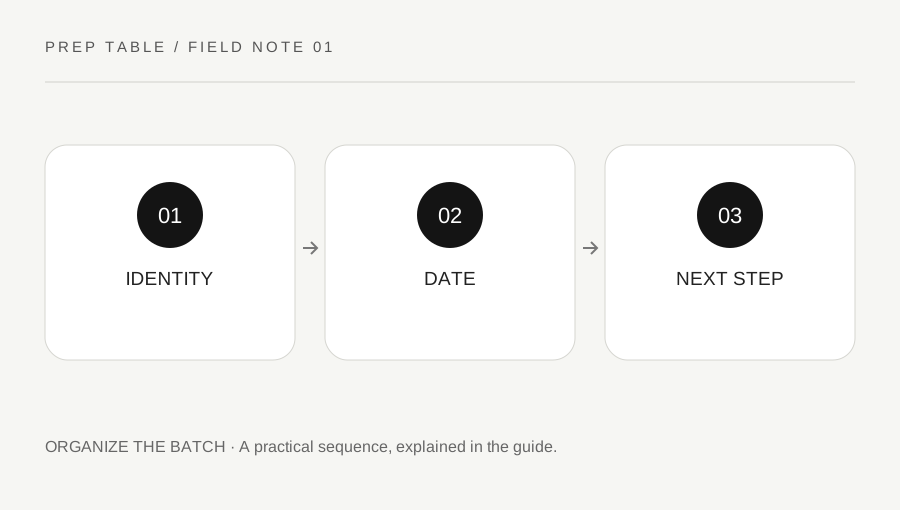
Original explanatory diagram. Examples illustrate a method or decision; they are not claims of personal testing.
Name the contents clearly
Use a plain food name and enough detail to distinguish similar containers. Chicken filling and vegetable filling are more useful than lunch A and lunch B when another person needs to know what is inside. Keep ingredient and allergen information where relevant.
Do not rely only on lid colour because lids can be exchanged. A label on the container or an otherwise reliable identification method should remain readable under the intended storage conditions. Use materials suitable for the container and avoid placing unsafe adhesive or ink in contact with food.
Record dates without resetting history
Write the preparation or opening date as appropriate to the food and product. Keep freezing and thawing information separately if relevant. Moving food into a new container does not restart its storage history, and a fresh label should not conceal an older component's date.
Use current official storage guidance and the actual product instructions to determine the relevant limit. Do not invent a universal seven-day rule for every meal. Different food categories and handling histories can require different decisions.
Keep the next action available
A label or linked kitchen note can identify whether a component is ready to eat, needs cooking or requires appropriate reheating. Avoid ambiguous words such as ready if they might be read as safe to eat cold when the product requires another process.
For frozen food, keep the supported thawing or preparation source available. For a meal with several components, name any separately packed sauce or garnish. The label need not contain a whole recipe, but it should point to clear instructions rather than a guessed timer.
Use a worked container example
Imagine two similar rice containers, one prepared today and one from an earlier safe batch. A label saying rice is not enough to distinguish their histories. Record their actual dates and component states, then plan use under appropriate guidance.
If the earlier date cannot be established, do not replace it with today's date because the container was repacked. Use official advice and discard uncertain food where appropriate. The purpose of the label is preserving evidence, not making every container appear usable.
Review labels during the next plan
Before shopping or cooking again, inspect existing containers and their actual storage conditions. Use a clear inventory with the same food names and dates. Remove obsolete labels when an empty container is properly cleaned so they do not describe the next batch accidentally.
Keep private dietary or personal information out of unnecessary public photographs. A household label can be concise and still be useful. The successful system is one another user can interpret accurately, with food safety governed by real history and guidance rather than the neatness of handwriting.
Use a sample label on an empty clean container before filling a batch. Check whether the writing remains readable at the actual storage location and whether another household member can identify the food and next step. Keep the date format unambiguous, using a month name or an agreed full-date convention when needed. If a meal contains components with different histories, preserve that information in the kitchen note instead of giving every part the newest date. Do not calculate a safe window from the appearance of the label alone. The exercise tests communication, while the actual storage decision still uses food identity, product instructions and real handling history. Remove the sample when the container is cleaned for another purpose.
A practical checklist
Choices are saved in this browser. Reset them here or clear this site’s browser storage.
Questions that come up
Does a new container give leftovers a new storage window?
No. Repacking does not erase the food’s earlier handling history. Preserve the relevant dates and follow appropriate guidance.
Can every meal use one seven-day label?
No universal period applies to every food. Use the actual product and current official storage guidance.
Must the whole recipe fit on the label?
No. Keep the essential identity and history on it, with clear supported handling instructions available separately.
References & scope
Background references checked on 18 October 2026. Worked examples and diagrams are original teaching material.