Meal-Prep Fridge Zones: Separate Raw Food from Ready-to-Eat Containers
A refrigerator needs usable space, appropriate temperature and separation that prevents raw-food leaks reaching ready-to-eat food. Organize the actual appliance according to its instructions and food-safety guidance. A tidy shelf is useful only when the contents and conditions remain clear.
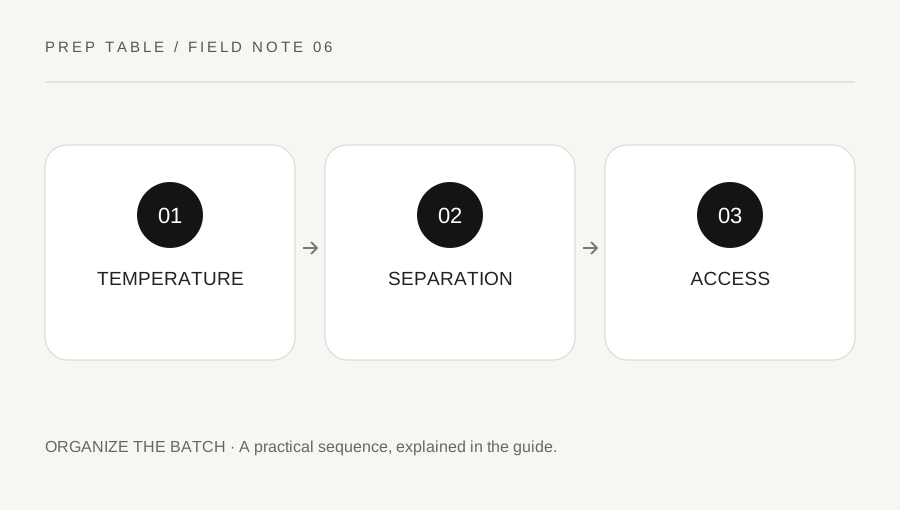
Original explanatory diagram. Examples illustrate a method or decision; they are not claims of personal testing.
Check temperature before rearranging
Use an appropriate appliance thermometer and follow official guidance for refrigeration at 40°F or below. Read the refrigerator instructions for controls, air paths and storage arrangements. A dial number is not necessarily the actual food-storage temperature.
Do not overload the appliance with a large batch that blocks circulation. Plan space before cooking. If the refrigerator cannot support the intended storage safely, reduce the batch or choose another appropriate plan rather than stacking containers wherever they fit.
Contain raw foods appropriately
Keep raw meat, poultry and seafood in suitable leakproof containment and arrange them so their juices cannot reach ready-to-eat food. Follow the actual appliance and food guidance rather than a decorative shelf map copied without context.
Prepared meals, ready-to-eat produce and clean serving components should remain protected. A lid helps identify and contain a meal but does not repair an earlier leak or contamination event. Clean affected areas according to appropriate guidance and reassess exposed food.
Keep a clear ready-to-eat area
Use readable labels with food identity and relevant dates. Group containers so the intended next meal can be found without opening many lids. Do not rely only on colour-coded containers whose lids may be exchanged.
Keep product-specific storage instructions visible. A prepared meal and an unopened packaged ingredient can have different limits. Moving an older component into a front row does not extend its safe window; use actual history and current guidance.
Plan a batch before filling shelves
Imagine preparing four lunches while the refrigerator already contains several opened products. Check which foods are still appropriate to use, their actual dates and available space before shopping. Prepare only the quantity that can be cooled and stored through a suitable process.
Use appropriate shallow containers for prompt cooling where official guidance calls for them. Do not leave a hot pot on the counter indefinitely because the planned shelf is full. The storage plan belongs before the cooking task, not after it.
Review zones as conditions change
Check for spills, unreadable labels and blocked air paths during ordinary use. Keep the thermometer reading and product instructions central. A photo of a neat refrigerator cannot establish that food stayed within safe conditions.
If a power failure or temperature problem occurs, use the relevant official decision guidance rather than assuming the zone layout protected every item. The useful organization system preserves separation, history and access while recognizing that temperature and actual handling determine the next decision.
Keep a small appliance note with the thermometer location, observed reading and date where useful, following the thermometer and refrigerator instructions. A reading at one moment is information, not proof of uninterrupted conditions over several days. Check available shelf space before cooking and preserve the intended air paths. If an appliance problem or outage occurs, use the relevant decision guidance instead of relying on the zone map. For a shared refrigerator, make the ready-to-eat and raw-food containment rules understandable to other users. A clear label and suitable leakproof container help communication, but neither repairs an unknown earlier leak. The practical goal is protected food, appropriate temperature and usable access, with the actual appliance design kept in view. Keep an appliance diagram with the household notes so another person can locate the thermometer and understand which containers require protected placement.
A practical checklist
Choices are saved in this browser. Reset them here or clear this site’s browser storage.
Questions that come up
Does a neat refrigerator prove food is safe?
No. Actual temperature, handling history, separation and product limits still matter.
Can I store raw food anywhere if it has a loose cover?
Use suitable leakproof containment and placement that prevents contamination, following appliance and official guidance.
Does moving food to a new shelf reset its date?
No. Preserve the actual preparation, opening and storage history.
References & scope
Background references checked on 18 October 2026. Worked examples and diagrams are original teaching material.