Freeze Meal Components in Planned Portions After Appropriate Cooling
A freezer plan should identify the food, portion and intended later use before containers are filled. Freezing does not repair unsafe handling. Follow suitable cooking, prompt cooling and storage guidance, then package manageable amounts for a clear future thawing or cooking process.
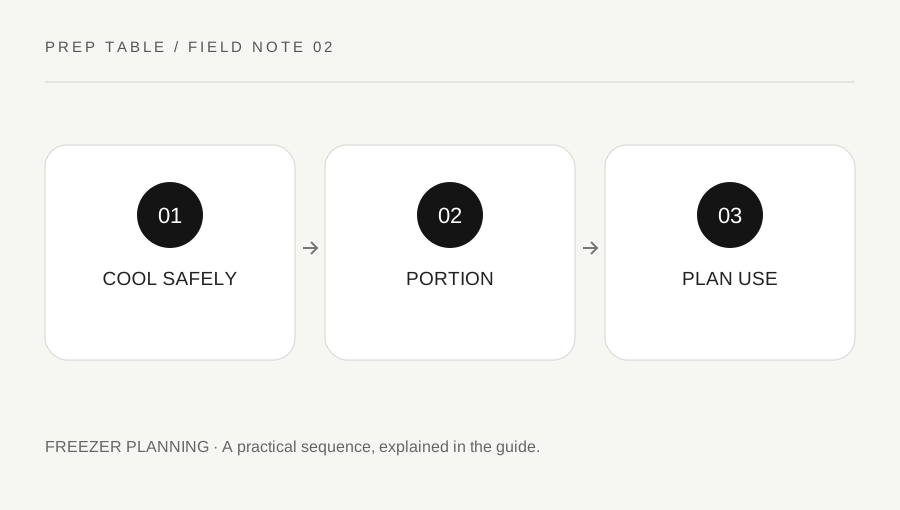
Original explanatory diagram. Examples illustrate a method or decision; they are not claims of personal testing.
Choose components suitable for freezing
Check the actual recipe, product and official storage information. Some foods retain texture better than others, and a quality limit is different from a safety limit. Do not assume every prepared salad or dairy mixture freezes well simply because it fits in a container.
Name the component and its state: cooked soup, prepared sauce or another specific food. Keep raw ingredients and ready-to-eat components distinct. A freezer inventory saying meals provides too little information for a later handling decision.
Cool and refrigerate promptly
Follow official guidance for perishable cooked food, including prompt storage in suitable shallow containers. Do not leave a large pot on the counter until completely cold as a default method. Plan sufficient refrigeration and freezer space before cooking a large batch.
Use equipment and containers appropriate to the temperature and process. Avoid overpacking a refrigerator so cold air cannot circulate. Freezing begins with a safely handled component; a later frozen state cannot establish that the earlier cooling stage was appropriate.
Choose a practical portion size
Match portions to the actual future meal, household needs and suitable container. A single huge block may be inconvenient if only one small serving is needed. Do not treat one portion size as a universal nutritional target.
Follow container instructions for freezer use, fill level and any expansion space. Keep lids and seals suitable for the actual food. An ordinary reused package is not automatically appropriate for freezing or later heating.
Record identity and later handling
Label food name, actual preparation and freezing dates, component state and relevant instructions. Keep original product or recipe guidance accessible. Moving a previously refrigerated component into the freezer does not erase its earlier history.
For a worked plan, divide a suitable safely handled soup batch into the amounts you expect to use, identify each container and record the supported thawing or reheating process. Do not invent a universal microwave time from container size alone.
Review the freezer as an inventory
Keep an accessible list of what is present and remove entries when portions are used. Check the freezer temperature with appropriate equipment and follow current official guidance. FoodSafety.gov's frozen storage times generally address quality when food remains continuously at 0°F or −18°C or below.
That statement is not permission to ignore power outages, damaged packaging or uncertain earlier handling. Keep real conditions in the record. The useful plan makes later use straightforward without making a safety promise based only on the word frozen.
Before preparing the batch, count suitable containers and decide which actual portions they will hold. Check the maker's freezer instructions and any expansion-space requirement for the food. Keep a list showing food name, component state, preparation date, freezing date and intended later process. If an amount is only estimated, mark it as such rather than printing a false exact weight. Store the record where it can be updated without repeatedly opening the freezer. When a portion is removed, record that change so an empty inventory entry is not mistaken for an available dinner. A freezer plan should support a clear next meal while preserving the earlier safe-handling history, not make every frozen container appear newly prepared.
A practical checklist
Choices are saved in this browser. Reset them here or clear this site’s browser storage.
Questions that come up
Can freezing rescue food stored unsafely?
Do not rely on it. Freezing does not undo an unsafe earlier handling history or establish that a food is appropriate to use.
Are freezer quality limits the same as refrigerator limits?
No. Read the relevant official chart and conditions. Continuously frozen storage and refrigerated storage are different contexts.
Can any container go from freezer to microwave?
No. Follow the container and food instructions for freezing, thawing and heating compatibility.
References & scope
Background references checked on 18 October 2026. Worked examples and diagrams are original teaching material.