One Batch, Different Portions: Calculate the Total Without Assigning Everyone the Same Amount
Household members can choose different amounts of the same prepared component. Calculate the total from those stated portions, then check actual yield and food handling. The numbers here are arithmetic examples, not nutrition targets for any individual.
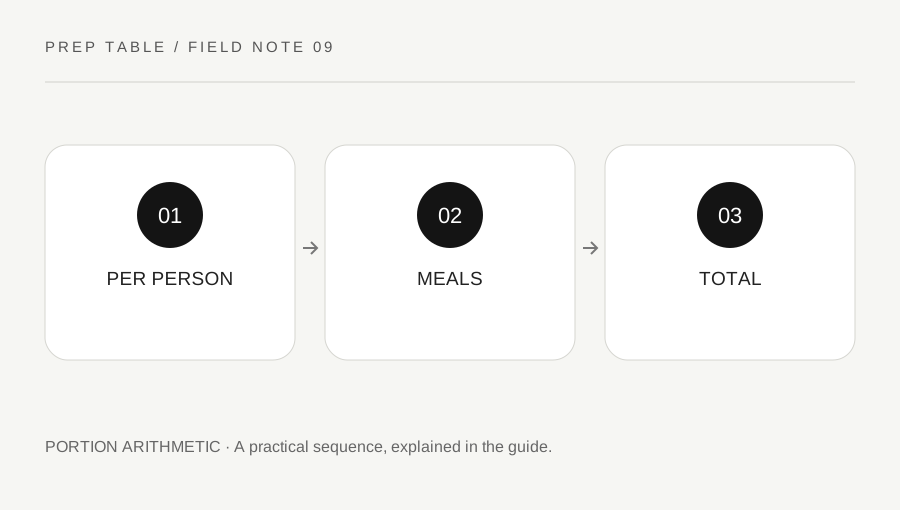
Original explanatory diagram. Examples illustrate a method or decision; they are not claims of personal testing.
Define the component and quantity state
Name what you are portioning and whether its weight is cooked, drained or another stated form. Keep different components in separate rows. A rice amount, a sauce amount and a mixed finished meal are not interchangeable units.
Ask what the actual household plan needs rather than assigning a universal container size. Individual dietary or medical questions require appropriate advice. This guide only explains how to add stated quantities once those choices have been made.
Work through two different portions
Imagine two people planning four meals each from one cooked component. One stated example portion is 150 grams and the other 200 grams. Each meal pair needs 350 grams; four pairs need 1,400 grams usable cooked food.
The same result comes from four times 150 plus four times 200. These are illustrative numbers. They do not establish a suitable serving for either person or predict how much dry ingredient a particular cooking method will yield.
Compare the actual usable batch
After appropriate preparation, weigh the usable food at a stated stage with a suitable tare procedure. If the batch provides less than the planned amount, revise the portion plan transparently or prepare another suitable component through its supported method.
Do not hide a shortfall by marking every container with the original target while filling them differently. A record should distinguish planned and actual amounts. If food remains, plan it under appropriate storage guidance rather than assuming it belongs in an extra meal with no date.
Keep containers and labels readable
Use containers suitable for the food, storage and intended reheating process. A larger container does not make a larger portion mandatory. Identify different portion plans clearly without exposing unnecessary private dietary information in public photographs.
Keep actual food identity and dates on the labels. A person name or colour alone can be ambiguous if lids are exchanged. If a component requires cooking or reheating, preserve its instructions regardless of the portion size.
Review quantity and handling separately
After a real batch, note whether the planned amounts matched actual use and whether the process remained manageable. Do not infer satisfaction or dietary suitability solely from a weighed container. People and meal contexts vary.
Food-safety endpoints and storage rules do not scale down because a portion is smaller. Use the relevant guidance for the actual food. The useful result is an auditable household quantity plan that respects different stated portions without turning the arithmetic into a personalized diet prescription.
If the same illustrative household changes from four meal pairs to three, the total becomes three times 350 grams, or 1,050 grams. The portion choices stay the same while the meal count changes. Write that distinction in the sheet so a smaller total is not misread as a recommendation to reduce anyone's meal. Check the actual cooked component available and account for any remaining amount separately. Keep each component's quantity state visible; a mixed meal total cannot automatically replace a rice-only row. This small example shows how a clear table can support different household plans without assigning nutritional meaning to the arithmetic or changing food-safety requirements to match the calendar.
A practical checklist
Choices are saved in this browser. Reset them here or clear this site’s browser storage.
Questions that come up
Are 150 and 200 grams recommended portions?
No. They are arithmetic examples. Individual needs and the rest of the meal determine appropriate portions.
Does a smaller portion need a lower safe temperature?
No. Food-safety endpoints do not decrease in proportion to portion size.
What if the batch is smaller than planned?
Revise the actual amounts or prepare another suitable component transparently. Do not label containers with quantities they do not contain.
References & scope
Background references checked on 18 October 2026. Worked examples and diagrams are original teaching material.