Cooked-Grain Yield: Keep Dry Weight and Ready-to-Portion Weight Separate
A recipe can specify dry grain while a lunch container is portioned by cooked weight. Keep those quantities separate and record actual yield after a suitable preparation. One observed ratio is a planning note, not a universal conversion for every grain or method.
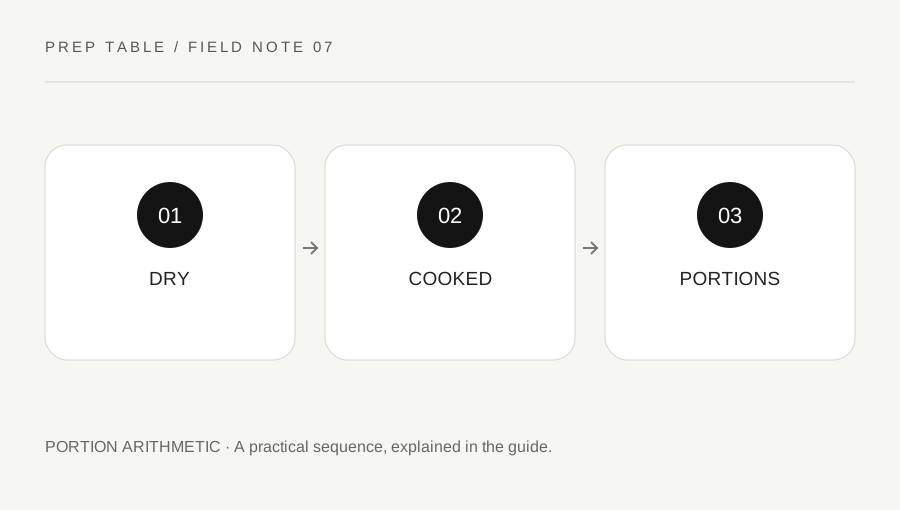
Original explanatory diagram. Examples illustrate a method or decision; they are not claims of personal testing.
Read the quantity state
Check whether the source says dry rice, cooked rice, prepared couscous or another clearly defined state. Similar words can hide different quantities. A 200-gram dry amount is not automatically interchangeable with 200 grams cooked.
Use the actual package or a suitable verified recipe for preparation. Grain form, method and draining can affect the resulting mass. Do not adjust water to force a desired yield unless following appropriate recipe guidance. The cooking method should remain supported while the measurement describes what happened.
Weigh with a consistent stage
Use a suitable clean food-contact container and tare procedure. Record cooked weight at a stated stage appropriate to safe handling. Keep cookware and serving utensils out of the net food weight.
Do not delay necessary cooling or refrigeration to obtain a photograph or a perfectly timed measurement. Follow official guidance for prompt storage of perishable cooked food. A measurement plan should fit safe handling, not create a long counter wait.
Work through an illustrative yield
Suppose an actual teaching record begins with 200 grams dry grain and ends with 600 grams ready-to-portion cooked grain at the stated stage. The observed mass ratio is three to one for that record. It does not establish the water ratio or universal yield for the product.
If three containers receive equal shares, each gets 200 grams cooked grain. That is portion arithmetic, not an individual dietary recommendation. If another batch produces 570 grams, recalculate the shares from the actual amount rather than silently treating it as 600.
Keep planned and measured amounts distinct
A planning table can show expected yield, actual yield and usable amount after handling. Leave unknown values labeled as estimates. Material left in the pot or lost during transfer can explain a difference between theoretical and usable quantities.
Avoid reporting unsupported decimals from a scale that cannot resolve them. Record the actual product and method so a later comparison is meaningful. A ready-cooked pouch and dry grain cooked at home are different starting states even when the finished lunch looks similar.
Use the record for the next batch
After a genuine preparation, keep the package method, dry amount, measured cooked amount and portion plan together. Use a comparable observed range cautiously for planning and verify the next actual batch.
Store and reheat the cooked food under appropriate guidance. A yield note does not extend storage limits or prove a food is safe to eat cold. Its useful role is preventing a dry-versus-cooked unit mistake and making the actual amount available for lunch containers clear before division.
Check a second arithmetic example using 570 grams of actual usable cooked grain. Three equal shares would be 190 grams each, rather than the 200-gram planning amount from a 600-gram expectation. Record the difference without changing the dry-grain note retrospectively. If 30 grams remained on equipment, document that only if it was actually observed or measured; do not invent a loss to explain a convenient total. Keep the product and cooking method with both records. A later planning estimate can use genuinely comparable observations, while each actual batch still needs its own safe handling and portion check. This makes the yield sheet useful without pretending a household record establishes a universal water-absorption law.
A practical checklist
Choices are saved in this browser. Reset them here or clear this site’s browser storage.
Questions that come up
Does a three-to-one observation apply to every rice or grain?
No. Product, method and measurement stage can differ. Treat it as a specific record rather than a universal conversion.
Is cooked weight a dietary prescription?
No. The example illustrates arithmetic. Individual portions depend on needs and the meal.
Should I leave grain out to measure later?
Do not delay appropriate cooling and refrigeration for a record. Fit measurement into safe handling.
References & scope
Background references checked on 18 October 2026. Worked examples and diagrams are original teaching material.