Pack a Component Meal Kit Instead of Mixing Every Ingredient in Advance
Some meals are easier to assemble when a sauce, crisp component or ready-to-eat garnish stays separate. A component kit can preserve flexibility, but every part still needs its own safe handling. Separation for texture is different from an allergy-control plan.
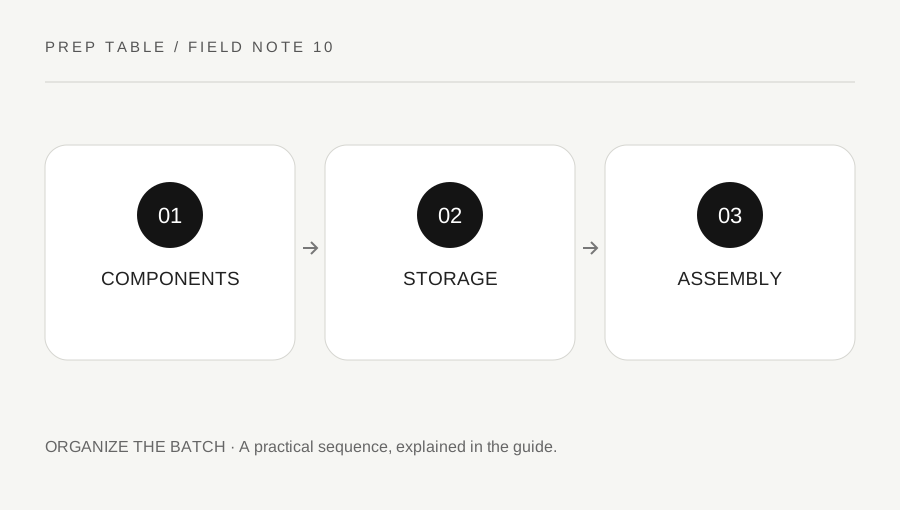
Original explanatory diagram. Examples illustrate a method or decision; they are not claims of personal testing.
Map the meal into practical parts
List the prepared base, cooked filling, ready-to-eat garnish and sauce where applicable. Name each clearly and identify its starting state. A component that still needs cooking should not be labeled simply ready beside a cold garnish.
Choose separation for a concrete reason, such as avoiding a wet bread or allowing a dressing to be added near service. Do not create many tiny containers without a useful purpose. The kit should make the actual meal easier to handle, not become an organizational display.
Give each component appropriate storage
Follow product and official guidance for refrigeration, freezing and usable time. Components can have different histories, so do not assign the newest preparation date to the whole kit automatically. Preserve an older safely handled component's actual information.
Use suitable food-contact containers and seals. A sauce jar is not automatically microwave-safe, and a compartment divider does not necessarily prevent leaks. Check the actual container instructions and the intended transport arrangement.
Write the final assembly order
Keep the supported reheating or cooking process with the component it governs. Ready-to-eat garnish should remain protected from raw-food surfaces and unsuitable heat. Add sauce or crisp details at the appropriate stage for the actual recipe.
For a worked example, a prepared filling can travel separately from bread and a suitable cool topping, with proper temperature control. The recipient needs to know which part is reheated and which is added afterward. Do not provide a guessed universal microwave time for every container.
Keep allergy questions separate
Packing a topping on the side does not automatically make the remaining meal suitable for an allergy. Ingredient labels, earlier contact and the person's appropriate requirements still matter. Use qualified guidance where needed.
Communicate what was used and how it was handled rather than applying a blanket safe label. A texture-based component kit and an allergy-aware preparation process can coexist, but they answer different questions and should not be confused.
Review whether the kit helped
After a real meal, note whether assembly was clear, the components stayed appropriately controlled and the number of containers was manageable. If a separate item was forgotten, revise the label or simplify the plan.
Keep actual dates and instructions with any remaining portions. The useful kit is one that works for the household's real routine. It does not need an elaborate layout or a promise of identical texture after several days; practical component identity and safe handling remain central.
Use one line per component with identity, starting state, actual date, storage instruction and final action. A prepared filling, a ready-to-eat garnish and a sauce can then be read without opening every container. If a component still requires cooking, make that action explicit. A vague ready label can create a different interpretation for the recipient. Keep any separate utensils or assembly instructions practical for the actual destination. If the person cannot reheat there, choose an appropriate meal plan rather than assuming a hot component can simply be eaten later after an uncontrolled wait. Review the real kit after use and simplify containers that did not serve a clear purpose while preserving the necessary handling distinctions.
A practical checklist
Choices are saved in this browser. Reset them here or clear this site’s browser storage.
Questions that come up
Does a divided box prevent every leak or contact?
No. Check the actual container design and use appropriate handling. A divider is not a universal seal or allergy-control system.
Can the whole kit use the newest date?
Do not erase older component history. Use actual dates and relevant storage guidance.
Must every meal be packed separately in many pieces?
No. Use only separation that makes the actual meal clearer or more manageable.
References & scope
Background references checked on 18 October 2026. Worked examples and diagrams are original teaching material.