Carry a Perishable Lunch Cold: Plan the Bag, Cold Sources and Destination
A lunch that starts refrigerated still needs temperature control during transport and waiting time. USDA recommends an insulated lunch bag and at least two cold sources for perishable food. Check the whole journey and destination rather than assuming a bag alone keeps every meal safe.
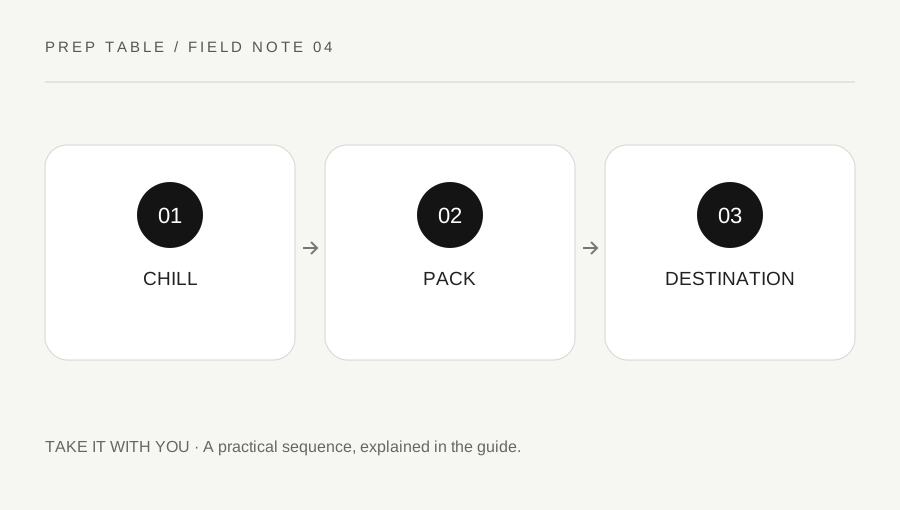
Original explanatory diagram. Examples illustrate a method or decision; they are not claims of personal testing.
Identify which components are perishable
Read the actual meal and product instructions. Cooked leftovers, dairy and many prepared combinations need refrigeration. Do not infer shelf stability from a dry appearance or a sauce ingredient. A meal assembled from shelf-stable packages can become perishable after opening and preparation.
Keep bread or another suitable separate component distinct where useful for texture, but do not let that distract from the cold foods. The bag plan should name the components and their temperature-control needs.
Prepare the bag and cold sources
Use an appropriate insulated bag or box and at least two suitable cold sources under USDA's packed-lunch guidance. Follow the bag and cold-source instructions. A decorative lunch tote without an actual cold plan is not equivalent to refrigeration.
Pack food that has been properly chilled and safely handled. Do not place a warm freshly cooked meal into an ordinary cold lunch bag and assume it will cool safely during the trip. Plan cooking and cooling early enough to use an appropriate process.
Check the entire waiting period
Include travel, delays and time before eating. A short commute can still be followed by several hours at a desk. If refrigeration is available at the destination, use it appropriately and follow its arrangements rather than leaving the bag in a warm location.
Keep the bag away from avoidable heat and do not assume a cold pack remains effective indefinitely. Use relevant official time and temperature guidance, including the conditions for discarding uncertain food. Never taste-test a questionable lunch to decide whether it is safe.
Work through a changed-day example
Suppose lunch was planned for midday but a meeting moves it later. Check whether the actual cold-storage arrangement remains appropriate. Do not rely on the original eating time in the label if the food has spent longer under different conditions.
If a safe history cannot be established, use official guidance and choose another meal where appropriate. A plan should allow that decision without pressure to eat a prepared portion merely because effort went into making it.
Review the practical packing system
After a real day, note whether the bag fit the food and cold sources, whether destination refrigeration was available and what caused any delay. Keep location and personal schedule information private when sharing a packing example.
Do not publish one bag's performance as a universal safety guarantee without suitable evidence. The useful record describes the actual conditions and supported handling method. Cold lunch preparation is complete only when the meal's storage and transport plan works beyond the home refrigerator.
Make a journey note with packing time, travel, destination refrigeration and expected eating time. Include delays that commonly occur instead of using the shortest possible trip as the whole plan. Check that the bag can hold the meal and the required cold sources without damaging containers. Use the product instructions for the actual packs and bag. If the destination has a refrigerator, confirm access rather than assuming a shared appliance is available. A change in meeting time can change the waiting period even when the commute stays the same. Keep the actual history clear and use official guidance for any uncertain food. The meal is not made safe merely by being labelled lunch or placed in an attractive insulated-looking tote.
A practical checklist
Choices are saved in this browser. Reset them here or clear this site’s browser storage.
Questions that come up
Is an insulated bag enough without cold sources?
Do not assume so. Follow USDA packed-lunch guidance, including at least two cold sources for perishable food.
Does a short commute settle the whole plan?
No. Include the time before eating and any available destination refrigeration.
Can I pack warm food into a cold lunch bag to cool it?
Use an appropriate safe cooling process first. An ordinary transport bag is not a validated cooling method for a warm batch.
References & scope
Background references checked on 18 October 2026. Worked examples and diagrams are original teaching material.